 02873009677
 contact@envyenglish.vn

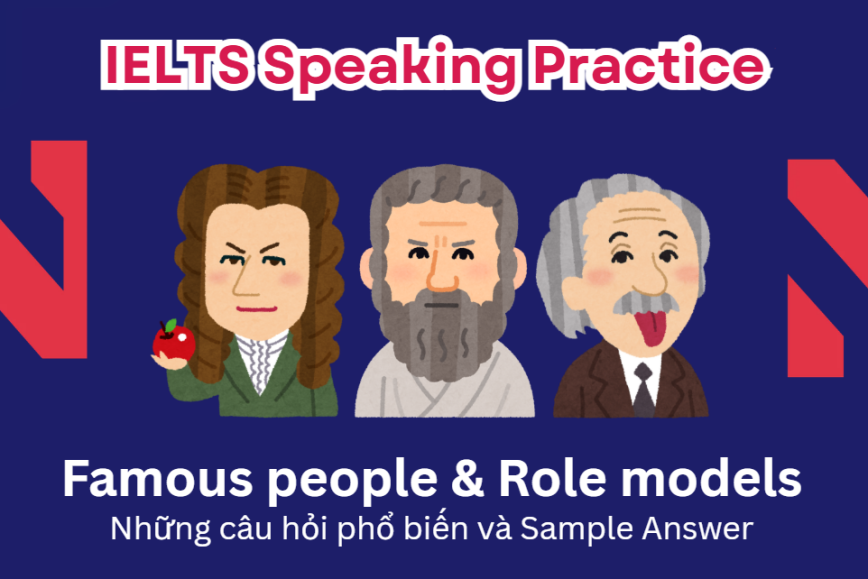
1. Questions
Part 1 – Famous People & Role Models (10 Questions)
Do you usually follow famous people?
Who is someone you admire?
Do you think celebrities influence young people?
Would you like to become famous?
What kinds of famous people are popular in your country?
Do you prefer actors, athletes, or musicians?
Have social media influencers become more important nowadays?
Do you think famous people should behave responsibly?
Why do some people become role models?
Have your role models changed over time?
Part 2 – Cue Card
Describe a famous person or role model that you admire.
You should say:
who the person is
how you learned about them
what they are famous for
and explain why you admire them.
Part 3 – Famous People & Role Models Discussion (10 Questions)
Why do people admire celebrities?
Should famous people be role models for society?
How does social media affect celebrity culture?
Why do young people follow influencers?
Are famous people under too much pressure?
Should celebrities share their personal opinions publicly?
What qualities make someone a good role model?
Do athletes and entertainers influence society differently?
Can ordinary people become role models?
How might celebrity culture change in the future?
2. Questions & Answers
Question 1: Do you usually follow famous people?
I occasionally follow famous people, especially individuals who are influential in education, business, sports, or social issues. However, I am generally more interested in people’s achievements, ideas, and contributions rather than celebrity gossip or personal drama. Social media has made it much easier to follow public figures and learn about their work. I think famous people can inspire others if they use their influence responsibly.
Public figure (n.phr): người của công chúng
e.g: Public figures influence society.
Celebrity gossip (n.phr): tin đồn người nổi tiếng
e.g: Some people enjoy celebrity gossip.
Social issue (n.phr): vấn đề xã hội
e.g: Influencers discuss social issues.
Use influence responsibly (v.phr): sử dụng ảnh hưởng có trách nhiệm
e.g: Celebrities should use influence responsibly.
Question 2: Who is someone you admire?
One person I admire greatly is Michelle Obama because she is intelligent, confident, and socially influential. I respect her communication skills, leadership abilities, and dedication to education and social equality. In addition, she often encourages young people to pursue education and personal growth. I think she represents both professionalism and compassion.
Leadership ability (n.phr): khả năng lãnh đạo
e.g: Managers need leadership abilities.
Personal growth (n.phr): phát triển bản thân
e.g: Reading supports personal growth.
Social equality (n.phr): bình đẳng xã hội
e.g: Governments promote social equality.
Compassion (n): lòng trắc ẩn
e.g: Doctors need compassion.
Question 3: Do you think celebrities influence young people?
Yes, celebrities strongly influence young people because many teenagers admire famous individuals and imitate their lifestyles, fashion, or opinions. Social media has increased this influence significantly by allowing celebrities to communicate directly with audiences. Positive role models can inspire confidence and ambition, but negative behavior may also affect young people badly. I think celebrities should recognize their social responsibility.
Social responsibility (n.phr): trách nhiệm xã hội
e.g: Celebrities have social responsibility.
Positive role model (n.phr): hình mẫu tích cực
e.g: Teachers are positive role models.
Lifestyle influence (n.phr): ảnh hưởng lối sống
e.g: Social media creates lifestyle influence.
Imitate (v): bắt chước
e.g: Children imitate adults.
Question 4: Would you like to become famous?
Not necessarily, because fame can create pressure, privacy problems, and constant public attention. Although being famous may provide opportunities and financial benefits, it can also reduce personal freedom significantly. I would rather be respected for meaningful achievements than become famous simply for popularity. I think privacy and emotional balance are very important in life.
Public attention (n.phr): sự chú ý công chúng
e.g: Celebrities receive public attention.
Personal freedom (n.phr): tự do cá nhân
e.g: Fame reduces personal freedom.
Meaningful achievement (n.phr): thành tựu có ý nghĩa
e.g: Scientists pursue meaningful achievements.
Emotional balance (n.phr): cân bằng cảm xúc
e.g: Rest improves emotional balance.
Question 5: What kinds of famous people are popular in your country?
In Vietnam, singers, actors, athletes, and social media influencers are especially popular among young people. In addition, successful entrepreneurs and inspirational public figures are becoming increasingly respected in modern society. Many celebrities gain popularity through entertainment programs and online platforms. I think social media has changed the way fame develops nowadays.
Social media influencer (n.phr): người ảnh hưởng mạng xã hội
e.g: Teenagers follow social media influencers.
Inspirational figure (n.phr): nhân vật truyền cảm hứng
e.g: Athletes can become inspirational figures.
Online platform (n.phr): nền tảng trực tuyến
e.g: Celebrities use online platforms.
Entertainment industry (n.phr): ngành giải trí
e.g: The entertainment industry is competitive.
Question 6: Do you prefer actors, athletes, or musicians?
I personally admire athletes and public speakers more because they often represent discipline, determination, and hard work. Athletes especially inspire people through perseverance and physical dedication. However, I also appreciate musicians and actors because art and entertainment can positively influence emotions and culture. I think every field has individuals who deserve admiration.
Physical dedication (n.phr): sự cống hiến thể chất
e.g: Athletes require physical dedication.
Perseverance (n): sự kiên trì
e.g: Success requires perseverance.
Positive influence (n.phr): ảnh hưởng tích cực
e.g: Teachers have positive influence.
Hard work (n.phr): làm việc chăm chỉ
e.g: Achievement requires hard work.
Question 7: Have social media influencers become more important nowadays?
Yes, social media influencers have become extremely influential because large audiences spend significant amounts of time online. Influencers can shape trends, opinions, and consumer behavior very quickly through digital platforms. In addition, companies increasingly collaborate with influencers for marketing purposes. However, I think audiences should evaluate online content critically rather than following trends blindly.
Consumer behavior (n.phr): hành vi tiêu dùng
e.g: Influencers affect consumer behavior.
Digital platform (n.phr): nền tảng kỹ thuật số
e.g: Businesses advertise on digital platforms.
Marketing purpose (n.phr): mục đích tiếp thị
e.g: Companies use influencers for marketing purposes.
Evaluate critically (v.phr): đánh giá phản biện
e.g: Students should evaluate information critically.
Question 8: Do you think famous people should behave responsibly?
Yes, I think famous people should behave responsibly because they influence large audiences, especially young people. Public figures who promote positive values can inspire education, kindness, and social awareness. On the other hand, irresponsible behavior may normalize harmful attitudes or actions. I believe influence should come with responsibility.
Positive value (n.phr): giá trị tích cực
e.g: Schools teach positive values.
Social awareness (n.phr): nhận thức xã hội
e.g: Campaigns improve social awareness.
Public influence (n.phr): ảnh hưởng công chúng
e.g: Celebrities have public influence.
Irresponsible behavior (n.phr): hành vi thiếu trách nhiệm
e.g: Irresponsible behavior affects audiences.
Question 9: Why do some people become role models?
People become role models because they demonstrate qualities such as intelligence, perseverance, kindness, or professional success that others admire. In many cases, individuals who overcome difficulties or contribute positively to society inspire respect and admiration. Role models often motivate people to improve themselves and pursue goals more confidently. I think genuine character is more important than fame itself.
Professional success (n.phr): thành công nghề nghiệp
e.g: Education supports professional success.
Genuine character (n.phr): phẩm chất chân thật
e.g: People admire genuine character.
Overcome difficulty (v.phr): vượt qua khó khăn
e.g: Athletes overcome difficulties.
Self-improvement (n): cải thiện bản thân
e.g: Reading encourages self-improvement.
Question 10: Have your role models changed over time?
Yes, my role models have changed significantly as I have matured and gained more life experience. When I was younger, I admired people mainly for fame or talent, but now I value intelligence, emotional maturity, and meaningful contributions more. Experiences often change people’s priorities and perspectives over time. I think maturity influences what qualities people admire most.
Emotional maturity (n.phr): sự trưởng thành cảm xúc
e.g: Difficulties develop emotional maturity.
Meaningful contribution (n.phr): đóng góp có ý nghĩa
e.g: Scientists make meaningful contributions.
Life experience (n.phr): trải nghiệm cuộc sống
e.g: Travel provides life experience.
Personal perspective (n.phr): góc nhìn cá nhân
e.g: Education changes personal perspectives.
Part 2: Describe a famous person or role model that you admire.
One famous person that I truly admire is Michelle Obama because she is intelligent, confident, and highly influential in both education and social issues. I first learned about her through speeches and interviews that were shared widely on social media and educational platforms. Over time, I became increasingly interested in her background, communication style, and contributions to society.
She is widely known as a lawyer, author, and former First Lady of the United States. In addition, she is respected for her work in education, public health, and social equality campaigns. What makes her especially impressive is not only her professional success but also the way she communicates with confidence, empathy, and emotional intelligence. Many people admire her because she represents both professionalism and compassion at the same time.
One reason why I admire her so much is her exceptional communication ability. Whenever she gives speeches or interviews, she speaks clearly, confidently, and persuasively while still sounding genuine and approachable. Public speaking is an extremely valuable skill in modern society, and I think her communication style inspires many young people to become more confident and articulate. I also appreciate the fact that she often encourages students and young women to pursue education and personal growth.
Another quality that I respect is her resilience and determination throughout her career. Achieving success in highly competitive and public environments requires not only intelligence but also emotional strength and persistence. Despite facing criticism and pressure from the media, she has continued promoting positive values and social awareness. I think people who remain professional and respectful under pressure deserve admiration.
I also admire her because she uses her public influence responsibly. Instead of focusing only on fame or popularity, she often discusses meaningful social topics such as education, equality, health, and youth empowerment. Famous individuals can influence society strongly, especially younger generations, so I believe it is important for public figures to promote positive messages and responsible behavior. In my opinion, true role models inspire people intellectually and emotionally rather than simply entertaining them.
Overall, Michelle Obama is someone I genuinely admire because she combines intelligence, leadership, communication skills, and compassion very effectively. Her achievements and personal qualities motivate many people to pursue education, confidence, and self-improvement. I think role models become truly influential when they encourage others to grow positively and contribute to society.
Communication ability (n.phr): khả năng giao tiếp
e.g: Lawyers need communication abilities.
Emotional intelligence (n.phr): trí tuệ cảm xúc
e.g: Managers require emotional intelligence.
Public influence (n.phr): ảnh hưởng công chúng
e.g: Celebrities have public influence.
Social awareness (n.phr): nhận thức xã hội
e.g: Campaigns improve social awareness.
Youth empowerment (n.phr): trao quyền cho giới trẻ
e.g: Education supports youth empowerment.
Positive value (n.phr): giá trị tích cực
e.g: Schools teach positive values.
Self-improvement (n): sự cải thiện bản thân
e.g: Reading encourages self-improvement.
Professionalism (n): tính chuyên nghiệp
e.g: Employees should maintain professionalism.
Part 3 – Discussion
Question: Why do people admire celebrities?
People admire celebrities because famous individuals often represent success, talent, beauty, confidence, or achievement that others aspire to achieve. In addition, celebrities receive constant media attention, which increases their visibility and influence in society. Some public figures also inspire people through hard work, perseverance, or meaningful social contributions. I think admiration becomes more positive when it focuses on values and achievements rather than fame alone.
Public figure (n.phr): người của công chúng
e.g: Public figures influence society.
Meaningful contribution (n.phr): đóng góp ý nghĩa
e.g: Scientists make meaningful contributions.
Media attention (n.phr): sự chú ý truyền thông
e.g: Celebrities receive media attention.
Perseverance (n): sự kiên trì
e.g: Athletes need perseverance.
Question: Should famous people be role models for society?
To some extent, yes, because famous people influence large audiences, especially children and teenagers. Celebrities who promote positive values such as education, kindness, and responsibility can inspire social improvement. However, not every famous person should automatically become a role model because fame does not always reflect good character or ethical behavior. I think society should focus more on values and actions than popularity.
Ethical behavior (n.phr): hành vi đạo đức
e.g: Leaders should demonstrate ethical behavior.
Positive value (n.phr): giá trị tích cực
e.g: Families teach positive values.
Social improvement (n.phr): cải thiện xã hội
e.g: Education encourages social improvement.
Good character (n.phr): phẩm chất tốt
e.g: Teachers should show good character.
Question: How does social media affect celebrity culture?
Social media has transformed celebrity culture because famous people can now communicate directly with audiences without relying completely on traditional media. Platforms such as short-form video applications and photo-sharing applications allow celebrities to build personal brands and influence trends rapidly. However, social media also creates pressure for public figures because they are constantly observed and criticized online. I think celebrity culture has become more interactive but also more intense.
Personal brand (n.phr): thương hiệu cá nhân
e.g: Influencers build personal brands.
Traditional media (n.phr): truyền thông truyền thống
e.g: Television is traditional media.
Public criticism (n.phr): sự chỉ trích công chúng
e.g: Celebrities face public criticism.
Interactive culture (n.phr): văn hóa tương tác
e.g: Social media creates interactive culture.
Question: Why do young people follow influencers?
Many young people follow influencers because they find them relatable, entertaining, or inspirational. Influencers often share lifestyles, opinions, fashion, or daily experiences that audiences find interesting and emotionally engaging. In addition, social media algorithms constantly expose users to influencer content, increasing popularity rapidly. However, I think young people should think critically instead of following trends blindly.
Emotionally engaging (adj.phr): thu hút cảm xúc
e.g: Videos should be emotionally engaging.
Social media algorithm (n.phr): thuật toán mạng xã hội
e.g: Algorithms affect online behavior.
Trend blindly (v.phr): chạy theo xu hướng mù quáng
e.g: Teenagers should not follow trends blindly.
Relatable (adj): dễ đồng cảm
e.g: Influencers seem relatable to audiences.
Question: Are famous people under too much pressure?
Yes, famous people often experience enormous pressure because they constantly receive public attention, criticism, and expectations from audiences and media organizations. Maintaining popularity and protecting personal privacy can become emotionally exhausting over time. In addition, social media increases pressure because mistakes or controversies spread very quickly online. I think fame can sometimes negatively affect mental health and emotional well-being.
Personal privacy (n.phr): quyền riêng tư cá nhân
e.g: Celebrities lose personal privacy.
Mental health (n.phr): sức khỏe tinh thần
e.g: Stress affects mental health.
Public expectation (n.phr): kỳ vọng công chúng
e.g: Athletes face public expectations.
Emotionally exhausting (adj.phr): gây mệt mỏi tinh thần
e.g: Fame can feel emotionally exhausting.
Question: Should celebrities share their personal opinions publicly?
I think celebrities have the right to express personal opinions publicly, especially regarding important social issues. Famous individuals can raise awareness and encourage discussion because they influence large audiences. However, celebrities should communicate responsibly and avoid spreading misinformation or harmful ideas. I believe freedom of expression should be balanced with social responsibility.
Freedom of expression (n.phr): tự do ngôn luận
e.g: Democracies support freedom of expression.
Social responsibility (n.phr): trách nhiệm xã hội
e.g: Celebrities have social responsibility.
Raise awareness (v.phr): nâng cao nhận thức
e.g: Campaigns raise awareness.
Spread misinformation (v.phr): lan truyền thông tin sai lệch
e.g: Social media spreads misinformation.
Question: What qualities make someone a good role model?
A good role model should demonstrate qualities such as honesty, discipline, kindness, resilience, and responsibility. In addition, people who inspire others through meaningful actions and positive behavior usually earn long-term respect. I think genuine character is more important than popularity or fame. True role models encourage people to improve themselves positively.
Genuine character (n.phr): phẩm chất chân thật
e.g: People admire genuine character.
Positive behavior (n.phr): hành vi tích cực
e.g: Schools encourage positive behavior.
Long-term respect (n.phr): sự tôn trọng lâu dài
e.g: Leaders earn long-term respect.
Resilience (n): khả năng phục hồi
e.g: Athletes need resilience.
Question: Do athletes and entertainers influence society differently?
Yes, athletes and entertainers often influence society in different ways because their careers focus on different values and activities. Athletes usually inspire people through discipline, physical achievement, and perseverance, while entertainers mainly influence emotions, fashion, culture, and entertainment trends. Both groups can affect public attitudes and behavior significantly. I think their social influence depends on how responsibly they use their popularity.
Physical achievement (n.phr): thành tựu thể chất
e.g: Sports require physical achievement.
Entertainment trend (n.phr): xu hướng giải trí
e.g: Music creates entertainment trends.
Public attitude (n.phr): thái độ công chúng
e.g: Media affects public attitudes.
Social influence (n.phr): ảnh hưởng xã hội
e.g: Celebrities have social influence.
Question: Can ordinary people become role models?
Yes, absolutely, because role models do not need to be famous or wealthy. Teachers, parents, community volunteers, and hardworking individuals can inspire others through daily actions, kindness, and dedication. In many cases, ordinary people influence society more directly and meaningfully than celebrities. I think genuine positive behavior matters more than public recognition.
Community volunteer (n.phr): tình nguyện viên cộng đồng
e.g: Community volunteers help society.
Public recognition (n.phr): sự công nhận công chúng
e.g: Success does not require public recognition.
Hardworking individual (n.phr): người chăm chỉ
e.g: Hardworking individuals inspire students.
Dedication (n): sự cống hiến
e.g: Doctors show dedication to patients.
Question: How might celebrity culture change in the future?
I think celebrity culture will become increasingly digital and interactive because social media and technology continue developing rapidly. Influencers and online personalities may become even more influential than traditional celebrities in the future. In addition, audiences may expect public figures to demonstrate stronger social responsibility and authenticity. I believe future celebrity culture will focus more on direct audience connection and online influence.
Online personality (n.phr): nhân vật nổi tiếng trực tuyến
e.g: Online personalities attract large audiences.
Audience connection (n.phr): kết nối với khán giả
e.g: Influencers build audience connections.
Authenticity (n): tính chân thật
e.g: Audiences value authenticity.
Digital influence (n.phr): ảnh hưởng kỹ thuật số
e.g: Social media creates digital influence.
Nếu bạn đang bắt đầu từ con số 0 hoặc đã học nhưng “dậm chân tại chỗ”, Envy English Center có thể đồng hành cùng bạn:
Test trình độ miễn phí theo format IELTS để biết chính xác điểm mạnh – điểm yếu.
Nhận lộ trình học cá nhân hóa từ 0 → 6.5+, phù hợp tốc độ và mục tiêu.
Trực tiếp học với giáo viên IELTS 8.0+, chuyên “gỡ rối” Speaking & Writing – hai kỹ năng khó nâng band nhất.
Đặc biệt, khi đăng ký trong tuần này, bạn được tặng bộ từ vựng chuẩn IELTS band 7+.
📞 Hotline: 028 7300 9677 / 0948 197 270 (Zalo)
🌐 Website: envyenglish.vn
📍 Địa chỉ: 46/5 Tân Cảng, Phường Thạnh Mỹ Tây, Quận Bình Thạnh, TP.HCM


Thông tin gửi đi không thành công, vui lòng thử lại sau.
Nếu bạn cần liên hệ gấp, vui lòng gọi hotline
02873009677

Cảm ơn bạn đã gửi thông tin đến Envy English Center.
Chúng tôi sẽ liên hệ với bạn sớm nhất khi có thể.
Nếu bạn cần liên hệ gấp, vui lòng gọi hotline
02873009677
Thông tin gửi đi không thành công, vui lòng thử lại sau.
Nếu bạn cần liên hệ gấp, vui lòng gọi hotline
02873009677
Bạn đang có một bài test chưa hoàn thành.
Bạn có muốn tiếp tục bài test đó không?
Bạn có chắc là muốn gửi bài test này không?

Số câu trả lời đúng/40

Số câu trả lời đúng/40
Thông tin gửi đi không thành công, vui lòng thử lại sau.
Nếu bạn cần liên hệ gấp, vui lòng gọi hotline
02873009677
Thời gian làm bài kiểm tra đã hết.
Cảm ơn bạn đã cố gắng.
