 02873009677
 contact@envyenglish.vn

1. Xây dựng ý tưởng
Đề bài
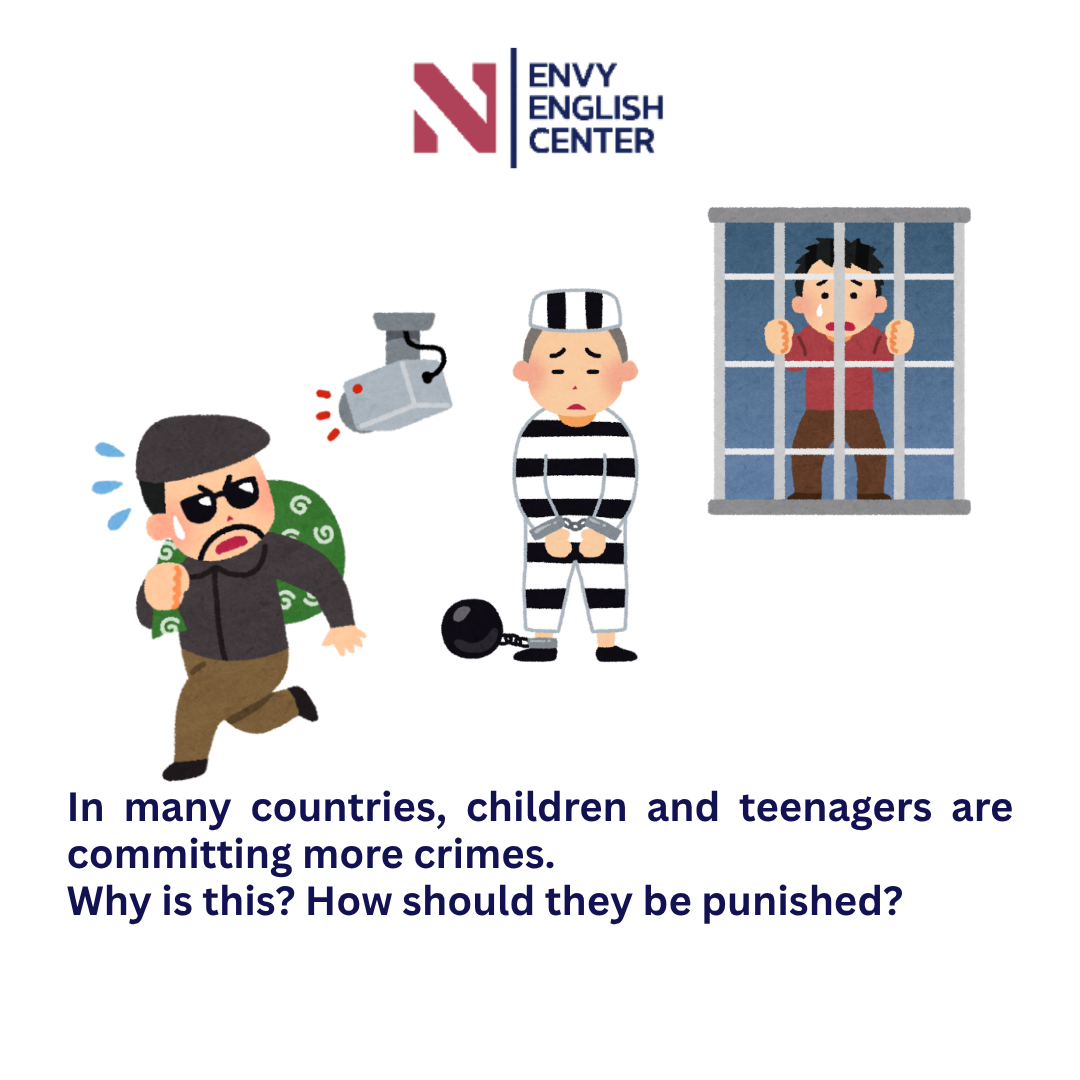
In many countries, children and teenagers are committing more crimes. Why is this? How should they be punished?
Dạng bài
Problem and solution essay
Xác định chủ đề và luận điểm
Topic: Juvenile Crime and Youth Punishment
Luận điểm 1: Causes of increasing juvenile crime
Lack of parental supervision: thiếu sự giám sát từ cha mẹ
Negative peer pressure: áp lực tiêu cực từ bạn bè
Exposure to violent media content: tiếp xúc với nội dung bạo lực
Poverty and financial difficulties: nghèo đói và khó khăn tài chính
Weak moral education: giáo dục đạo đức yếu kém
Drug and alcohol abuse: lạm dụng ma túy và rượu bia
Broken family environments: môi trường gia đình tan vỡ
Luận điểm 2: Appropriate punishments and solutions
Community service programs: chương trình lao động công ích
Rehabilitation instead of imprisonment: cải tạo thay vì bỏ tù
Counseling and psychological support: tư vấn và hỗ trợ tâm lý
Educational programs for young offenders: chương trình giáo dục cho trẻ phạm tội
Stricter parental responsibility: trách nhiệm nghiêm khắc hơn từ cha mẹ
Juvenile detention for serious crimes: trại giam vị thành niên cho tội nghiêm trọng
Skill development and vocational training: đào tạo kỹ năng và nghề nghiệp
Triển khai ý tưởng
Position 1
The rise in juvenile crime is mainly caused by poor parental supervision, negative social influences, and weak moral education, and young offenders should receive rehabilitation-focused punishments rather than severe prison sentences.
→ Sự gia tăng tội phạm vị thành niên chủ yếu do thiếu sự giám sát từ cha mẹ, ảnh hưởng xã hội tiêu cực và giáo dục đạo đức yếu kém, và trẻ phạm tội nên được áp dụng hình phạt mang tính cải tạo thay vì án tù nghiêm khắc.
Ví dụ:
Teenagers influenced by violent online content
Community service for minor crimes
Position 2
Young criminals who commit serious offenses should receive strict punishments because lenient treatment may encourage further criminal behavior.
→ Những thanh thiếu niên phạm tội nghiêm trọng nên bị trừng phạt nghiêm khắc vì sự khoan dung có thể khuyến khích hành vi phạm pháp tiếp diễn.
Ví dụ:
Juvenile detention centers
Strict laws against violent crimes
2. Lập dàn ý cho đề theo PEEL
Introduction
Paraphrase: increasing numbers of children and teenagers are involved in criminal activities
Question: causes of juvenile crime and suitable punishments
Thesis: juvenile crime is mainly caused by poor supervision and harmful social influences, and punishments should focus on rehabilitation rather than harsh imprisonment for most young offenders
Body Paragraph 1
Point: several social and family-related factors contribute to juvenile crime
Evidence: peer pressure, violent media, poverty, broken families, weak moral education
Explanation: young people are easily influenced and may lack guidance from adults
Link: social problems increase the likelihood of criminal behavior among teenagers
Body Paragraph 2
Point: punishments for young offenders should focus on education and rehabilitation
Evidence: counseling, community service, vocational training, juvenile detention for serious crimes
Explanation: rehabilitation can help teenagers change behavior and reintegrate into society
Link: balanced punishments are more effective than severe prison sentences alone
Conclusion
Summary: juvenile crime results from multiple social causes and should be addressed through rehabilitation-focused punishments
Restate: governments and families should cooperate to reduce youth crime and support behavioral improvement
3. Bài mẫu hoàn chỉnh
In many countries, the number of crimes committed by children and teenagers has increased significantly in recent years. This problem is mainly caused by social and family-related factors, and I believe young offenders should generally receive rehabilitation-focused punishments instead of severe prison sentences.
One major reason for rising juvenile crime is the lack of parental supervision in many families. Modern parents often work long hours and may not spend enough time monitoring their children’s behavior. As a result, young people can easily be influenced by negative peer pressure and become involved in illegal activities. Another important factor is the exposure to violent media content, including movies, online videos, and video games that normalize aggressive behavior. In addition, poverty and financial difficulties may push some teenagers toward theft or drug-related crimes in order to earn money. Other contributing factors include weak moral education, drug and alcohol abuse, and broken family environments, all of which may negatively affect children’s emotional and behavioral development.
In terms of punishment, I believe governments should focus mainly on rehabilitation rather than harsh punishment for young offenders. For less serious crimes, community service programs can teach responsibility and encourage positive social behavior. In addition, rehabilitation instead of imprisonment is often more effective because teenagers are still developing mentally and emotionally. Many young criminals would benefit from counseling and psychological support as well as educational programs for young offenders that help them continue their studies and improve future employment opportunities. However, in cases involving violent or repeated crimes, juvenile detention for serious crimes may still be necessary to protect society and discourage further criminal behavior.
Overall, juvenile crime is caused by a combination of family, social, and economic problems. Therefore, punishments should prioritize education, rehabilitation, and behavioral improvement rather than relying entirely on strict imprisonment.
(Word count: 321)
4. Lexical Resources List
New Vocabulary
lack of parental supervision (noun phrase): thiếu sự giám sát từ cha mẹ
E.g. Many social problems result from a lack of parental supervision.
negative peer pressure (noun phrase): áp lực tiêu cực từ bạn bè
E.g. Teenagers are strongly affected by negative peer pressure.
exposure to violent media content (noun phrase): tiếp xúc với nội dung bạo lực
E.g. Parents worry about children’s exposure to violent media content.
poverty and financial difficulties (noun phrase): nghèo đói và khó khăn tài chính
E.g. Crime is often linked to poverty and financial difficulties.
weak moral education (noun phrase): giáo dục đạo đức yếu kém
E.g. Schools should address weak moral education among students.
drug and alcohol abuse (noun phrase): lạm dụng ma túy và rượu bia
E.g. Governments are trying to reduce drug and alcohol abuse.
broken family environments (noun phrase): môi trường gia đình tan vỡ
E.g. Children from broken family environments may face emotional problems.
community service programs (noun phrase): chương trình lao động công ích
E.g. Courts often use community service programs for minor offenses.
rehabilitation instead of imprisonment (noun phrase): cải tạo thay vì bỏ tù
E.g. Many experts support rehabilitation instead of imprisonment.
counseling and psychological support (noun phrase): tư vấn và hỗ trợ tâm lý
E.g. Schools should provide counseling and psychological support.
educational programs for young offenders (noun phrase): chương trình giáo dục cho trẻ phạm tội
E.g. Governments should invest in educational programs for young offenders.
stricter parental responsibility (noun phrase): trách nhiệm nghiêm khắc hơn từ cha mẹ
E.g. Some countries encourage stricter parental responsibility.
juvenile detention for serious crimes (noun phrase): trại giam vị thành niên cho tội nghiêm trọng
E.g. Violent offenders may require juvenile detention for serious crimes.
skill development and vocational training (noun phrase): đào tạo kỹ năng và nghề nghiệp
E.g. Rehabilitation should include skill development and vocational training.
illegal activities (noun phrase): hoạt động phạm pháp
E.g. Peer pressure may lead teenagers into illegal activities.
aggressive behavior (noun phrase): hành vi hung hăng
E.g. Violent media can encourage aggressive behavior.
emotional and behavioral development (noun phrase): phát triển cảm xúc và hành vi
E.g. Family support affects emotional and behavioral development.
future employment opportunities (noun phrase): cơ hội việc làm trong tương lai
E.g. Education improves future employment opportunities.
repeated crimes (noun phrase): tội phạm tái diễn
E.g. Strict laws are needed for repeated crimes.
behavioral improvement (noun phrase): cải thiện hành vi
E.g. Counseling can support behavioral improvement.
Sentence Structures
1. This problem is mainly caused by + noun phrase, and I believe + clause (dùng để nêu nguyên nhân và quan điểm)
E.g. This problem is mainly caused by social and family-related factors, and I believe young offenders should generally receive rehabilitation-focused punishments instead of severe prison sentences.
2. One major reason for + noun phrase + is + noun phrase (dùng để mở đoạn nguyên nhân)
E.g. One major reason for rising juvenile crime is the lack of parental supervision in many families.
3. As a result, + noun phrase + can easily be influenced by + noun phrase (dùng để nêu hệ quả)
E.g. As a result, young people can easily be influenced by negative peer pressure and become involved in illegal activities.
4. Another important factor is + noun phrase + that + clause (dùng để mở rộng nguyên nhân)
E.g. Another important factor is the exposure to violent media content that normalizes aggressive behavior.
5. For less serious crimes, + noun phrase + can + verb + noun phrase (dùng để nêu giải pháp)
E.g. For less serious crimes, community service programs can teach responsibility and encourage positive social behavior.
6. Overall, + noun phrase + is caused by + noun phrase. Therefore, + clause (dùng để kết luận)
E.g. Overall, juvenile crime is caused by a combination of family, social, and economic problems. Therefore, punishments should prioritize education, rehabilitation, and behavioral improvement rather than relying entirely on strict imprisonment.
Nếu bạn đang bắt đầu từ con số 0 hoặc đã học nhưng “dậm chân tại chỗ”, Envy English Center có thể đồng hành cùng bạn:
Test trình độ miễn phí theo format IELTS để biết chính xác điểm mạnh – điểm yếu.
Nhận lộ trình học cá nhân hóa từ 0 → 6.5+, phù hợp tốc độ và mục tiêu.
Trực tiếp học với giáo viên IELTS 8.0+, chuyên “gỡ rối” Speaking & Writing – hai kỹ năng khó nâng band nhất.
Đặc biệt, khi đăng ký trong tuần này, bạn được tặng bộ từ vựng chuẩn IELTS band 7+.
📞 Hotline: 028 7300 9677 / 0948 197 270 (Zalo)
🌐 Website: envyenglish.vn
📍 Địa chỉ: 46/5 Tân Cảng, Phường Thạnh Mỹ Tây, Quận Bình Thạnh, TP.HCM


Thông tin gửi đi không thành công, vui lòng thử lại sau.
Nếu bạn cần liên hệ gấp, vui lòng gọi hotline
02873009677

Cảm ơn bạn đã gửi thông tin đến Envy English Center.
Chúng tôi sẽ liên hệ với bạn sớm nhất khi có thể.
Nếu bạn cần liên hệ gấp, vui lòng gọi hotline
02873009677
Thông tin gửi đi không thành công, vui lòng thử lại sau.
Nếu bạn cần liên hệ gấp, vui lòng gọi hotline
02873009677
Bạn đang có một bài test chưa hoàn thành.
Bạn có muốn tiếp tục bài test đó không?
Bạn có chắc là muốn gửi bài test này không?

Số câu trả lời đúng/40

Số câu trả lời đúng/40
Thông tin gửi đi không thành công, vui lòng thử lại sau.
Nếu bạn cần liên hệ gấp, vui lòng gọi hotline
02873009677
Thời gian làm bài kiểm tra đã hết.
Cảm ơn bạn đã cố gắng.
